
Is a Hair Transplant Permanent? The Genetic Science of Donor Dominance
If you are investing your time and savings into restoring your hairline, the most important clinical question is: is hair transplant permanent? The definitive medical answer is yes—transplanted hair follicles last for a lifetime. Have you ever noticed that even men with severe Norwood 7 baldness in their 80s still retain a thick horseshoe ring of hair around the back and sides of their head? That anatomical region is known as the Permanent Occipital Safe Donor Zone.
While follicles on the top of the scalp and temples possess high concentrations of androgen receptors that shrink when exposed to the hormone dihydrotestosterone (DHT), follicles in the occipital donor zone are genetically programmed without DHT sensitivity. Under Dr. Norman Orentreich’s landmark law of Donor Dominance, when we move an occipital follicle to your frontal hairline using Sapphire Hair Transplant or DHI Hair Transplant, it remembers its genetic origin and remains immune to pattern baldness forever. For a decade-by-decade breakdown, read our dedicated clinical study on What Happens to a Hair Transplant After 10 Years.

What Is the Real Hair Transplant Success Rate in 2026?
While the genetics of donor hair are permanent, the actual hair transplant success rate—defined medically as the percentage of extracted grafts that successfully establish microvascular blood supply and grow mature hair shafts at 12 to 18 months—depends entirely on surgical execution. At Bosphoria Hair in Istanbul, our documented graft survival rate is high, driven by five strict operating room controls:
| Clinical Survival Factor | Low-Tier / Inexperienced Clinic Risk | Bosphoria Hair Istanbul Protocol |
|---|---|---|
| 1. Follicular Transection Rate | 10%–20% of roots cut by large/blunt punches | <1.8% Transection via 0.65mm torque-controlled punches |
| 2. Graft Dehydration | Grafts left on dry gauze pads for minutes | Zero dry exposure; immediate hydration upon extraction |
| 3. Out-of-Body Temperature | Room temperature (22°C) saline depletes ATP | 4°C Chilled Hypothermic Storage preserves cellular ATP |
| 4. Mechanical Forceps Crush | Grabbing the delicate dermal papilla bulb with tweezers | Choi Implanter Pens & atraumatic epidermal-collar glide |
| 5. Recipient Vascular Bed | Wide steel razor slits sever capillary networks | V-Shaped Sapphire Crystal micro-channels preserve blood flow |
What About My Non-Transplanted Native Hair? (Preventing Future Gaps)
Here is the most important nuance every ethical specialist must explain: while your transplanted hair is permanent, your pre-existing native hairs behind the transplant can continue thinning over the next 5 to 15 years if left untreated. As we detail in our guide on What Happens If Hair Loss Continues After a Hair Transplant, Specialist Muhammed Yeni prevents unnatural future gaps using two strategies:
- Feathered Transition Zone Blending: We never build a dense “wall” of hair in the front that stops abruptly against thinning mid-scalp hair. Instead, we feather grafts into the surrounding thinning zone so there is never a harsh line of demarcation.
- Conservative Donor Reserve Management: Even when performing a 4,000-graft session (see our US vs. Turkey Cost Guide), we preserve 1,500 to 2,500 untouched grafts in your safe donor bank—plus recommend supportive Mesotherapy or DHT-blocker maintenance when appropriate.
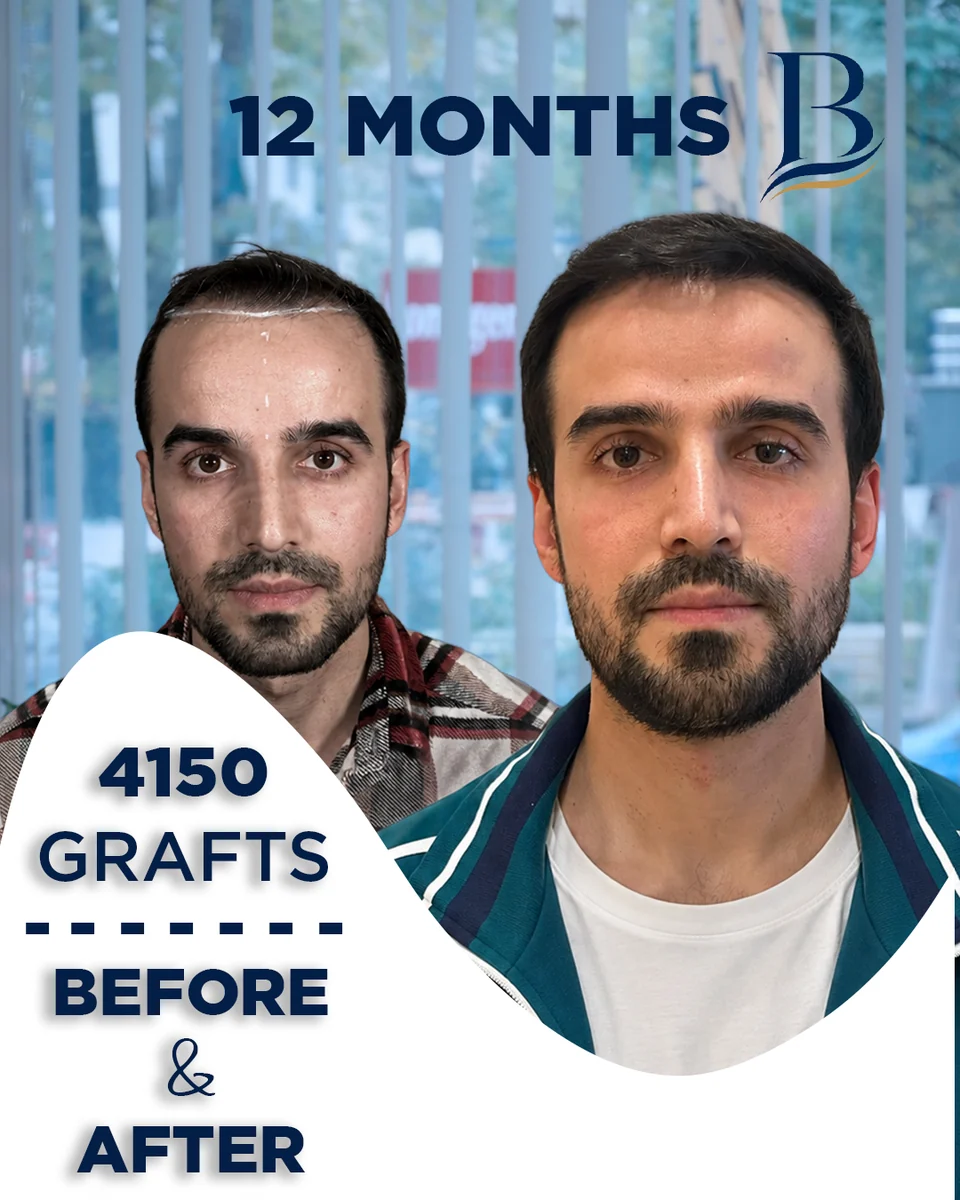
Verified Hair Transplant Before and After Proof (18-Month Case Study)
When reviewing hair transplant before and after photos online, always check the timeframe. Many clinics post Day-10 photos when the head is still buzzed and red. At Bosphoria Hair, we publish full 12-to-18-month matured transformations in our Hair Transplant Before and After Gallery—including our comprehensive 4,150-Graft 18-Month Patient Case Study.