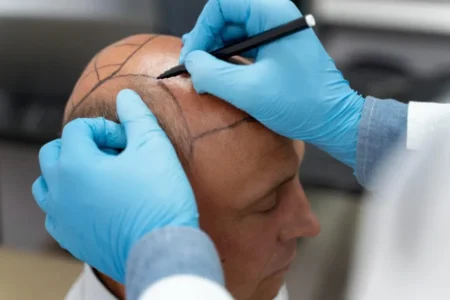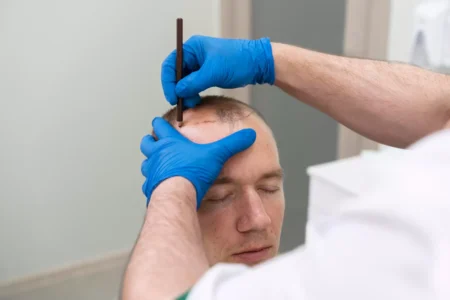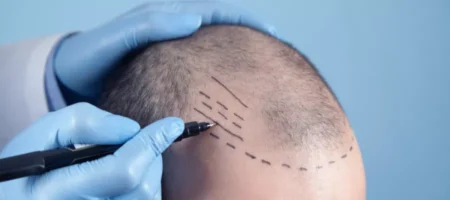

Most hair transplants require roughly 1,500 to 3,500 grafts, although a small hairline correction may need fewer than 1,000 and extensive baldness may require 4,000 or more. The exact number depends on the area being covered, the density needed for a natural appearance, and the amount of healthy donor hair available. A graft count is therefore an estimate made after examining the scalp, not a number that can be reliably chosen from a photograph alone.
Two people with similarly sized bald areas may still need different graft counts because hair thickness, curl, existing coverage, and future hair loss all matter.
What Is a Hair Transplant Graft?
A graft is a small unit of tissue containing a natural group of one to four hairs. Thus, 2,000 grafts does not mean 2,000 hairs. Units containing several hairs generally offer more visible coverage.
Single-hair grafts are especially valuable along the leading edge of a hairline, where a soft, irregular transition looks natural. Units containing several hairs are often placed farther back to create fullness. Their distribution matters as much as the total number transplanted.
How Is the Number of Grafts Calculated?
The starting point is the size of the thinning area, measured in square centimeters. The surgical plan then considers how many follicular units can be placed in each part without compromising existing hair or blood supply. For example, a 50 cm² area planned at 35 grafts per cm² would require approximately 1,750 grafts. That is a planning example, not a universal density target.
Existing hair matters too: a bare patch and a thinning area may need different densities. The scalp examination helps establish safe placement.
How Many Grafts Are Needed for Different Areas?
The following ranges are broad starting points rather than promises of a particular result. A low hairline, a large crown, or advanced hair loss may change the figures substantially.
| Area to Be Restored | Approximate Graft Range | Typical Goal |
|---|---|---|
| Small temple correction | 500–1,200 | Soften recession |
| Hairline and frontal edge | 800–1,800 | Create a natural frame |
| Wider frontal third | 1,500–2,500 | Improve visible frontal coverage |
| Crown | 1,000–2,000+ | Reduce the appearance of thinning |
| Extensive front-to-crown loss | 3,000–4,500+ | Distribute limited donor hair strategically |
These areas overlap, so adding the maximum figures would not give a dependable total.
What Factors Determine Your Graft Count?
Several details can change the estimate, sometimes by hundreds of grafts:
- Area size: A larger bald region generally needs more grafts for comparable coverage.
- Donor density: The back and sides must contain enough stable follicles for safe extraction.
- Hair characteristics: Coarse, curly, or wavy strands may provide greater visual coverage than very fine hair.
- Color contrast: Similar hair and scalp colors make thinning less noticeable.
- Future hair loss: A plan should preserve grafts in case untreated hair continues to thin.
How Many Grafts Are Needed for a Receding Hairline?
A modest hairline repair may use 800 to 1,500 grafts, while deeper recession requires more. Natural angles, an age-appropriate shape, and fine single-hair units at the edge help avoid an artificial line.
A conservative design may use fewer grafts and preserve options for future recession.
How Many Grafts Does the Crown Need?
Moderate crown restoration often requires 1,000 to 2,000 grafts, with larger areas needing more. The natural spiral growth pattern makes placement angles especially important.
With limited donor supply, frontal coverage may take priority, preserving grafts for future needs.
Graft Estimates by Norwood Hair Loss Stage
The Norwood scale describes male pattern baldness, but cannot determine donor capacity or exact graft requirements.
| Norwood Pattern | Typical Appearance | Broad Planning Range |
|---|---|---|
| II–III | Receding corners or frontal loss | 800–2,000 |
| IV | More extensive front and possible crown thinning | 2,000–3,000 |
| V | Large frontal and crown areas | 2,500–4,000 |
| VI–VII | Extensive scalp hair loss | 3,500–5,000+ if donor supply permits |
Advanced baldness may call for staged treatment or selective coverage when donor supply is limited.
Why Does the Donor Area Matter So Much?
Grafts usually come from the back and sides of the scalp, where hair is often more resistant to pattern loss. This reserve is finite. Excessive or uneven harvesting can leave visible thinning.
Donor assessment checks density, miniaturization, hair thickness, and scalp health. A large advertised graft count cannot replace this examination.
Is Higher Graft Density Always Better?
Not necessarily. Crowding grafts can stress recipient tissue and compromise growth. Natural fullness depends on hair thickness, direction, and contrast with the scalp, not only numerical density.
When exploring a hair transplant in Turkey, graft distribution matters as much as technique.
Does FUE or DHI Change the Graft Requirement?
FUE extracts follicular units individually, while DHI describes implantation with a specialized pen. Both still require careful calculations of coverage and donor supply. Neither automatically needs more grafts.
The FUE hair transplant guide and DHI hair transplant page explain these approaches in more detail. Method selection should follow the hair-loss pattern rather than a preferred headline graft count.
Do Women Need a Different Number of Grafts?
Women with a high hairline, temple recession, or localized thinning may benefit from transplantation. Widespread thinning can also affect donor hair and should be investigated first.
The female hair transplant guide covers these patterns. Shaving preferences do not change donor requirements.
Can 4,000 Grafts Be Transplanted in One Session?
Some patients can undergo a 4,000-graft session, but others lack sufficient donor hair. Extraction time, graft handling, and scalp condition also matter. Extensive plans may need multiple sessions.
Bosphoria Hair’s patient results show different graft counts and follow-up stages. Compare appearance and coverage, not numbers alone.
What Should Be Checked Before Agreeing to a Graft Estimate?
A useful consultation should clarify more than the final total:
- Which scalp zones will receive grafts, and in what approximate distribution?
- How was the donor area assessed, and what reserve should remain afterward?
- Is the proposed hairline suitable for the person’s age and possible future hair loss?
- Are existing hairs likely to keep thinning, and should that be treated first?
- Would one session provide a balanced result, or would staging be safer?
Does the Number of Grafts Affect Hair Transplant Results?
Graft count influences coverage but cannot guarantee survival. Extraction, handling, placement angles, and aftercare also matter. Transplanted hairs often shed initially; growth then develops over months, with results continuing to mature for 12 months or longer.
Transplanted hair cannot prevent surrounding natural strands from thinning later. Long-term planning remains essential.
Can 1,000 Grafts Make a Visible Difference?
A thousand well-placed grafts can make a noticeable difference when the target is small, such as one side of the hairline or a narrow strip of thinning hair. The improvement comes from filling the most visible gaps rather than trying to cover the entire scalp. For someone with widespread baldness, that same amount may create only a modest change.
Results also depend on the natural hairs left in the area. Placing grafts among healthy existing strands can produce more apparent fullness than using them across a completely bare region. Expectations should be based on the actual coverage plan.
Are Online Hair Graft Calculators Accurate?
Online calculators can give a rough starting range using photographs or a selected hair-loss stage. They cannot reliably measure follicle density at the back of the scalp, identify widespread miniaturization, or determine how many grafts can be extracted safely. Lighting, wet hair, and camera angles may also make the same thinning area look very different.
A more useful estimate comes from examining the recipient and donor regions together. It should explain the planned density, the likely number of hairs per graft, and which areas will remain untreated. A clear explanation is more valuable than a precise-looking number without a medical assessment.
Frequently Asked Questions
Is 2,000 Grafts Enough for a Hair Transplant?
Two thousand grafts may cover a limited frontal area, but not extensive front-and-crown loss. Area size and donor supply determine suitability.
How Many Hairs Are in 3,000 Grafts?
A graft typically contains one to four hairs, so 3,000 grafts may contain considerably more than 3,000 individual hairs. Exact counts vary.
Are 5,000 Grafts Too Many for One Hair Transplant?
Five thousand grafts is a large procedure. Feasibility depends on donor reserves and safe extraction; staged sessions may be preferable.
Can You Get More Grafts in a Second Hair Transplant?
A second procedure may be possible if donor hair remains. Previous extraction, scarring, and continuing hair loss must be assessed.