Hair mesotherapy may be considered before or after a hair transplant, but it is not an essential part of the procedure. The timing matters because a scalp preparing for surgery is very different from one recovering from newly implanted grafts. Injections that seem harmless on healthy skin are not appropriate over fresh surgical wounds.
Research has explored whether mesotherapy reduces shedding or speeds regrowth, but these benefits remain uncertain. Its place in transplant care deserves careful consideration.
What Is Hair Mesotherapy?
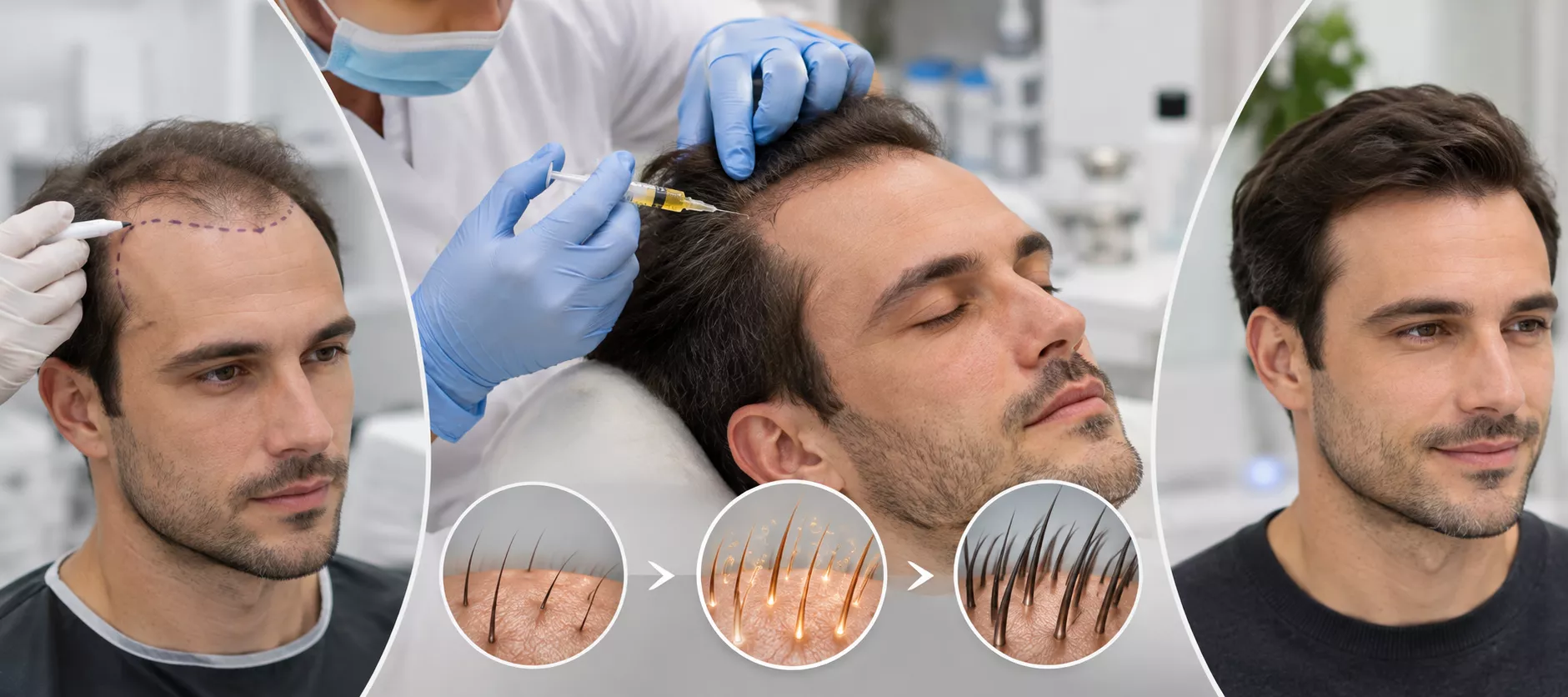
Hair mesotherapy involves a series of small injections into the scalp. The injected substances may contain vitamins, amino acids, peptides, or medications, depending on the product and treatment goal. There is no single formula that defines mesotherapy, which makes comparing results across studies difficult.
The treatment differs from a hair transplant. Mesotherapy does not move follicles into a bald area or create new follicles where none remain. It is investigated mainly as an additional approach for existing, living follicles. Learn more about the procedure on Bosphoria Hair’s mesotherapy page.
Can Hair Mesotherapy Be Used Before a Hair Transplant?
Yes, hair mesotherapy can be considered before transplantation, primarily when there is thinning in areas that still contain active follicles. The aim may be to address existing hair quality or shedding while the wider treatment plan is reviewed. It cannot replace donor assessment, diagnosis, or medical management of pattern hair loss.
There is no evidence-based requirement to complete a course before surgery. If injections are being considered, they should be planned sufficiently apart from the operation to avoid unnecessary scalp irritation or infection. An active inflammatory scalp condition needs attention before elective surgery.
Why Might Someone Consider Mesotherapy Before Surgery?
A transplant redistributes follicles without stopping ongoing loss. Protecting thinning native hair is a separate concern from choosing graft numbers.
Some injectable products show promise in small studies, but ingredients and schedules vary. None guarantees better surgery. Learn more about hair transplant in Turkey.
When Is Hair Mesotherapy Used After a Hair Transplant?
After surgery, the immediate priority is wound healing and protecting grafts. Newly implanted follicles sit within small surgical sites, while the donor region also needs time to recover. Additional scalp injections during this early phase could cause unnecessary trauma or introduce infection.
Mesotherapy may be discussed at a later follow-up, once healing has been assessed. There is no universally accepted week or month when everyone should start. The decision depends on scalp condition, the substances being injected, and whether there is a clear reason to add treatment.
Hair Mesotherapy Timing Before and After Transplantation
A useful timeline focuses on the condition of the scalp rather than a fixed appointment date. These stages describe general priorities, not instructions to book injections automatically.
| Stage | Main Priority | Mesotherapy Consideration |
|---|---|---|
| Before surgery | Diagnose hair loss and assess the donor area | Optional; requires a specific clinical reason |
| Surgery and first days | Protect grafts and prevent infection | Avoid injections into healing surgical sites |
| Early healing weeks | Allow crusts and irritation to resolve | Postpone until the scalp is assessed |
| Later recovery | Track native hair and new growth | May be discussed if clearly indicated |
| Long-term follow-up | Monitor ongoing hair thinning | Reassess benefits against cost and risk |
Does Mesotherapy Help Transplanted Grafts Survive?
No strong evidence currently shows that routine hair mesotherapy improves graft survival after transplantation. Graft survival depends on several factors, including careful extraction, handling, implantation, blood supply, and early aftercare. An injection treatment cannot compensate for problems during these stages.
An international hair transplant consensus published in 2023 did not reach agreement on mesotherapy as a standard transplant-related intervention. That is different from proving it never helps. It means the available evidence is not strong enough to recommend it routinely for every patient.
Can Mesotherapy Reduce Shock Loss After Hair Transplant?
Shock loss describes temporary shedding that may affect transplanted hair shafts or some existing hairs near the treated area. It often appears during the first weeks after surgery. Many transplanted follicles later enter a new growth phase, so early shedding does not automatically mean the grafts have failed.
What Are the Possible Benefits of Hair Mesotherapy?
The possible benefits depend heavily on the injected ingredients and the type of hair loss. They should be understood as areas of investigation, not guaranteed outcomes:
- Support for existing hair: Certain studied medications may improve density in selected patients with pattern hair loss.
- Targeted delivery: Injections place substances within the scalp, although direct delivery alone does not prove effectiveness.
- An additional treatment option: Mesotherapy may be considered when discussing a broader hair loss plan.
- Monitoring over time: Scheduled visits can offer opportunities to review shedding and scalp condition, independently of the injections.
Mesotherapy vs. PRP vs. Hair Transplantation
These treatments are often grouped together in advertisements, although they work differently. PRP uses a preparation derived from the patient’s blood, while mesotherapy can refer to many injected mixtures. A transplant physically relocates follicles.
| Treatment | Main Approach | Main Limitation |
|---|---|---|
| Hair mesotherapy | Injects selected substances into the scalp | Formulas and evidence vary |
| PRP | Injects platelet-rich preparation | Results and protocols are inconsistent |
| Hair transplantation | Moves existing follicles into thinning areas | Depends on donor supply and surgical planning |
Is Mesotherapy Necessary After FUE or DHI Hair Transplant?
Neither FUE nor DHI automatically requires mesotherapy. FUE concerns follicle extraction, while DHI refers to an implantation approach using a specialized pen. Differences in surgical technique do not establish a separate medical need for injectable scalp treatments.
The same recovery principle applies to both methods: healing first, optional treatments later. Readers comparing techniques can explore DHI hair transplantation without assuming that an injection package is part of essential aftercare.
How Many Mesotherapy Sessions Are Usually Needed?
A fixed number cannot be recommended for everyone. Clinics may offer several sessions spaced across weeks, but schedules vary according to the injected product and proposed indication. Research has not established one standardized course that reliably improves outcomes around hair transplantation.
What Are the Risks of Hair Mesotherapy?
Mesotherapy involves puncturing the skin, so it carries risks even when the visit itself is brief. Potential complications include:
- Pain and swelling: Temporary tenderness, redness, and bruising can follow injections.
- Infection: Poor sterile technique may allow bacteria into the scalp.
- Allergic reactions: A reaction may occur to an ingredient or local anesthetic.
- Scalp irritation: Inflammation can complicate assessment of healing after surgery.
- Unexpected hair changes: Published reports include worsening hair loss and scarring in rare cases.
Who Should Delay or Avoid Hair Mesotherapy?
An infected or inflamed scalp should not be injected before the cause is addressed. Treatment may also be unsuitable for someone with a known allergy to the proposed ingredients, certain bleeding problems, or other relevant medical conditions. Pregnancy and breastfeeding call for particular caution because safety data for many mixtures are limited.
A recent transplant is another reason to postpone elective injections until healing is confirmed. A qualified medical professional should identify the exact product, review medications, explain its regulatory status, and use sterile equipment. Products are not interchangeable simply because they are marketed as mesotherapy.
What Results Can You Realistically Expect?
After transplantation, visible growth generally begins several months later, with results continuing to mature across the first year. That timeline should not be credited automatically to mesotherapy. Bosphoria Hair’s before-and-after hair transplant gallery can provide visual context, but photographs cannot isolate the effect of a separate injection treatment.
Before or After: Which Timing Makes More Sense?
The better question is whether mesotherapy has a defined purpose at either stage. Before surgery, the priority is understanding the cause of thinning and protecting existing hair through treatments with established evidence. After surgery, the priority becomes graft protection, scalp healing, and monitoring growth.
| Question | Before Hair Transplant | After Hair Transplant |
|---|---|---|
| What is the main concern? | Ongoing thinning and surgical planning | Recovery and future hair growth |
| Is mesotherapy required? | No | No |
| What needs checking? | Diagnosis, product, and surgical schedule | Healing, irritation, and injection safety |
| What matters most? | Evidence-based hair loss care | Aftercare and scheduled follow-up |