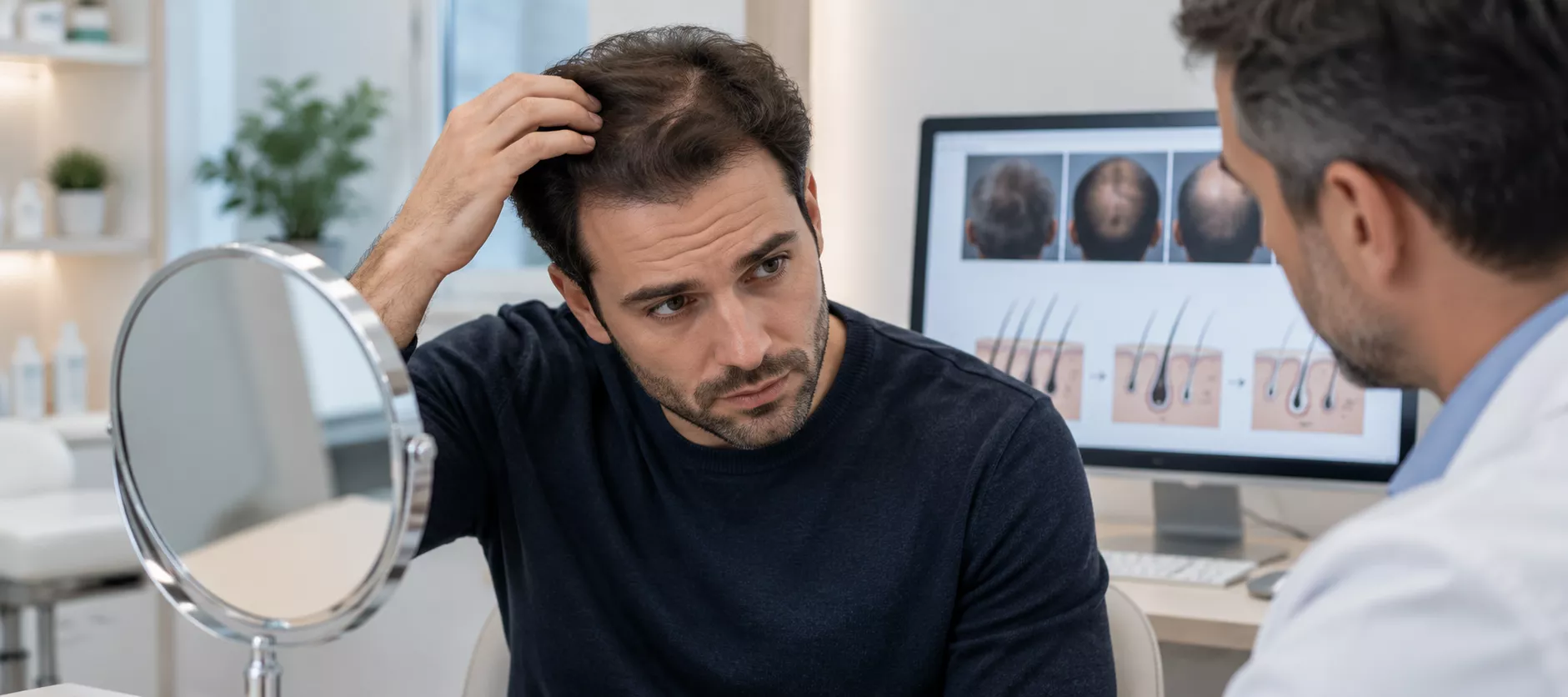
If hair loss continues after a hair transplant, it often affects existing hair rather than the transplanted follicles. A transplant can restore a receding hairline, but it cannot stop the underlying cause of hair loss. Years later, hair may thin behind the new hairline or around the crown. This does not necessarily mean grafts have failed. More often, the surrounding, non-transplanted hair is continuing to change. Understanding continued hair loss after a hair transplant helps patients protect results and consider further treatment.
Why Can Hair Loss Continue After a Hair Transplant?
A transplant relocates follicles, usually from the back or sides of the scalp, into areas where coverage has been lost. Those donor follicles are generally more resistant to the hormonal influences involved in androgenetic alopecia, also called pattern hair loss. Untouched follicles, however, remain susceptible. Surgery redistributes hair; it does not remove the underlying tendency to lose it.
This explains a frustrating situation: the transplanted hairline can stay relatively full while the hair immediately behind it becomes sparse. The contrast may grow slowly, sometimes years after surgery. A good result and later hair loss can coexist. This is particularly relevant when transplantation takes place before a patient’s pattern of hair loss has stabilized.
Early Shedding Is Not the Same as Continued Hair Loss
Patients often mistake normal postoperative shedding for a problem. Transplanted hair shafts commonly fall out within the first several weeks, while the follicles remain under the skin and prepare for a new growth cycle. Some nearby native hairs can shed temporarily too, a response commonly described as shock loss. Early appearance is a poor measure of the final outcome.
| Time After Surgery | What May Happen | How to Interpret It |
|---|---|---|
| First 2–8 weeks | Transplanted shafts shed | Often expected |
| Months 2–3 | Sparse or uneven coverage | Growth may not yet be visible |
| Months 4–6 | New hairs begin filling in | Results remain incomplete |
| Months 6–12 | Density and texture improve | Better time to evaluate progress |
| Beyond 12 months | New thinning elsewhere may emerge | Check for ongoing native hair loss |
Why Does Natural Hair Keep Thinning?
Pattern hair loss is progressive. In genetically susceptible follicles, dihydrotestosterone, or DHT, contributes to gradual miniaturization. Thick hairs become finer, growth cycles shorten, and eventually some follicles produce little visible coverage. A transplant cannot change the genetics of untouched follicles.
Other problems can add to the picture. Stress, illness, substantial weight change, nutritional deficiency, thyroid disorders, certain medications and inflammatory scalp conditions can all contribute to shedding. Not every patch of thinning after surgery is simply pattern baldness. Sudden, diffuse or unusually irritated areas deserve an examination rather than another cosmetic procedure.
How Ongoing Hair Loss Changes the Appearance of a Transplant
The most noticeable change is often an island of density. The front looks strong, yet the mid-scalp behind it slowly becomes thinner. Others notice crown thinning while the frontal area remains full. This can make a natural result look disconnected despite healthy graft growth.
This is why hairline placement and graft distribution should consider the future, not only a person’s current photograph. An extremely low or dense hairline may consume donor grafts that could be useful later. Patients exploring hair transplant options in Turkey should ask how their plan would accommodate additional thinning over time.
Can Transplanted Hair Eventually Thin Too?
Transplanted follicles are generally long-lasting, not invulnerable. Some may become finer with aging, and not all grafts survive or grow equally. Donor-area quality also varies. If the donor hair itself is affected by diffuse thinning, its long-term behavior may be less predictable than that of a stable donor zone.
First, identify what is disappearing. A thin-looking result might reflect reduced native hair, changes in hair caliber, poor graft growth or a combination of factors. Matching photographs are more useful than comparing different haircuts and lighting.
Identifying the Cause Before Starting Another Treatment
A proper review should examine the scalp, map the areas of change and compare the current condition with preoperative images. Trichoscopy can distinguish miniaturized hairs from regrowth. Targeted testing may help when medical causes are suspected.
| Finding | Possible Explanation | Sensible Next Step |
|---|---|---|
| Thinning behind a stable hairline | Progressive pattern loss | Discuss maintenance treatment |
| Shedding during early recovery | Postoperative shedding or shock loss | Follow healing and growth |
| Sudden diffuse shedding | Telogen effluvium or another trigger | Seek medical assessment |
| Redness, pain, scaling or pustules | Scalp inflammation or infection | Obtain prompt clinical review |
| Persistent sparse grafted area after maturation | Incomplete growth or other causes | Assess grafts and donor supply |
Treatments That May Help Preserve Existing Hair
For suitable patients, minoxidil and finasteride are among the established treatments for pattern hair loss. Minoxidil can support hair growth and help maintain density, while finasteride reduces DHT activity in men with androgenetic alopecia. Their benefits usually depend on continued use. Neither is a universal solution.
The choice should be made with a qualified medical professional, particularly if there are other conditions, medications or plans for pregnancy. Finasteride can cause adverse effects and is not appropriate for everyone. After surgery, even the timing of topical products should follow the treating clinician’s instructions so the recovering scalp is not irritated.
Do Supportive Treatments Make a Difference?
Platelet-rich plasma injections may help selected patients, but outcomes vary. They should be discussed as possible additions to an appropriate diagnosis and treatment plan, not as replacements for proven therapies. The same caution applies to vitamin products sold as guaranteed solutions; supplements mainly help when a relevant deficiency exists.
Some clinics also offer hair mesotherapy. Ask which substances are injected, what evidence exists, and what improvement is realistic. Good scalp care, sensible nutrition and treatment adherence remain important, but expensive routines cannot reliably prevent genetically driven hair loss by themselves.
| Approach | Main Purpose | Important Limitation |
|---|---|---|
| Minoxidil | Support growth and maintenance | Requires consistent use |
| Finasteride | Slow DHT-related loss in suitable men | Prescription assessment and side effects |
| PRP | Possible adjunctive support | Variable evidence and response |
| Mesotherapy | Clinic-dependent supportive treatment | Protocols and supporting evidence vary |
| Second transplant | Restore coverage where hair is lost | Uses a finite donor supply |
Why Long-Term Planning Matters: Muhammed Yeni’s Approach
At Bosphoria Hair Istanbul, Hair Transplant Expert Muhammed Yeni leads the clinic’s hair restoration work. According to the clinic, he has more than 11 years of professional experience and has performed over 4,000 procedures. Planning should account for donor capacity, future thinning and an age-appropriate hairline—not just graft counts. Hair caliber, existing density and the likely progression of thinning also influence how grafts should be distributed.
A consultation should consider future thinning and preserve donor reserves. The clinic’s approach to hair transplantation emphasizes individualized planning and follow-up. This matters especially for younger patients, whose long-term hair loss pattern may still be developing.
Is a Second Hair Transplant Always Necessary?
No. If a patient’s grafts are growing well and only mild native-hair thinning has appeared, monitoring or medically supervised treatment may be more appropriate than immediate surgery. Another session can restore coverage in selected cases, but only when the donor region has sufficient usable follicles and the scalp has been properly assessed.
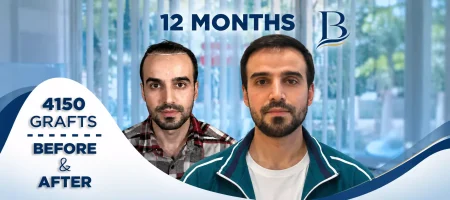
Technique alone cannot determine suitability. Whether someone previously had DHI hair transplantation or a conventional FUE procedure, the decision depends more on current hair distribution, donor reserves and expectations. Reviewing before-and-after results can help illustrate realistic changes, provided photographs are comparable.
What Should You Do If Hair Keeps Falling Out After Surgery?
- Record when shedding began and whether it affects transplanted or surrounding hair.
- Photograph the same areas monthly under consistent lighting rather than checking every day.
- Contact the transplant team for an assessment, especially if thinning seems to be increasing.
- Ask a dermatologist whether pattern loss, scalp disease or another cause is involved.
- Avoid starting prescription medicines or aggressive scalp treatments without medical advice.
When Should You Seek Medical Attention?
- Contact a clinician promptly if shedding comes with worsening pain, spreading redness, discharge, fever or marked scalp tenderness.
- Arrange an evaluation for sudden patchy loss, scarring, persistent inflammation or rapid thinning.
- Request a progress review if growth seems unexpectedly limited after the usual maturation period.
- Discuss significant shedding that begins long after recovery, particularly when there is a new medication or health change.
Keeping Your Results Natural for Years
Hair restoration is best understood as a long-term plan rather than a one-day event. The transplanted follicles may provide durable coverage, while untouched hair continues following its own biological course. Regular checks help spot changes early.
If you are concerned about hair loss after hair transplant surgery, bring dated photographs and details of your recovery to your follow-up appointment. You can also contact Bosphoria Hair to discuss your transplant history and whether an in-person medical assessment is appropriate. The aim is not to promise that shedding will never happen again, but to make each decision with a clear understanding of what is changing.